Revolution Prefigured: The Triumphal March of Revolutionary Socialism
I will not cease from Mental fight,
Nor shall my sword sleep in my hand:
till we have built the worker’s state,
across Europe’s wrecked and ravaged lands.
-Adaptation of Blake’s “Jerusalem”, found in propaganda poster in Liverpool, 1919.
Excerpts from Kurt Schumacher,European Social Democracy: A History (University of Berlin Press, 1942)
…The universal betrayal of the working-class on August 3rd, 1914 was a culmination of decades of bureaucratic degeneration in the social-democratic movement. The emergence of historical revisionism was a cancer upon the party, but even worse was the center’s tolerance for this right-wing deviationism, which would have the worker sign their peace with imperialism and reconcile themselves to the rule of capital.
There is plenty of blame that can be assigned to various actors, though the precise allocation of it is beyond the scope of the present study. The beginning of the war and the decisions taken by the social-democratic leadership did shed some light on this question, but above all, it revealed the sheer depth of the rot. Previously, social democrats may have contentedly spoken in revolutionary tones while making their peace with the state; now, they could no longer disguise the reality of their politics, which amounted to a craven capitulation to bourgeois class power.
If the war had the effect of a surgical lamp, demonstrating the full extent of the malady, in the long-run it also presented the possibility for renewal. Over the great war, the parties of social-democracy haltingly recovered their genuine Marxian heritage, prompted by the activism of workers and the critiques of ascendant bolshevists and a revitalized left which frequently operated outside the bounds of the decaying parties. This was a difficult and uneven process, occurring more quickly in some nations than others. In many respects, the slow, erratic leftward movement of the centrist parliamentarians retarded the organization of unified left opposition…
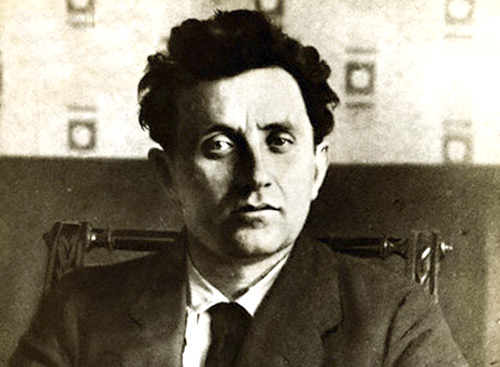
…The first attempt to coordinate opposition to the war came at the behest of Robert Grimm, a Swiss Socialist. In August, he hosted a conference in Geneva attended by 40 socialist delegates; most of these represented minority factions of their parties, with the exception of the Italian and some neutral delegations. The left-wing was composed of Lenin’s Bolsheviks, the Social Democratic Party of Poland and Lithuania, and some minor groups such as youth leagues. In the center was Grimm himself, Luxemburg and Liebknecht’s International Socialists, Trotsky’s inter-district group, and some Italians. The left viewed the proceedings as a means of coordinating revolutionary activity and as a precursor to the formation of a new internationale, while the right took a more pacifist line, hoping to use the conference to pressure the bourgeois states into signing a negotiated peace. Most elements of the center were united with the left on the matter of revolutionary action, but more skeptical toward breaking with the second internationale or existing socialist parties. At least some were distinguished from the Bolshevik-dominated left primarily by their distrust of Lenin, and here, the figure of Karl Radek was important as a bridge between left and center.
Robert Grimm, Swiss Socialist and initiator of the Geneva Conference

The Geneva Conference was not representative of the socialist movement as a whole; most of the European parties were still dominated by defencist majorities. Even in this context, the right-wing initially held an absolute majority of delegates, and Bolshevik resolutions were consistently voted down. This would change as the war went on, but for now the Geneva right had the closest connection to the growing centrist opposition in the parties. Most of these still viewed the Geneva movement with suspicion; Kautsky and the majority of the German center initially favored an initiative from the International Socialist Bureau (ISB) of the Second Internationale, as did the antiwar opposition in France. Rapprochement between Luxemburg’s International Group and the Kautskyist center of the SDP opened the prospect of Kautsky and his allies joining the Zimmerwald movement and strengthening its right flank, a nightmare prospect for Lenin, who would be marginalized in such an event. Kautsky turned out to not be particularly eager to join in any event, though an increased number of left-centrist German delegates attended the 1916 conference in Engelburg, who were situated somewhere between the right and the center - their presence offset the gains of the left, producing another conference which was, to use Lenin’s words “Mostly disappointing”.
Nonetheless, the left did gain a significantly greater presence on the enlarged ISC, an executive body of the Geneva Movement whose purpose was to coordinate opposition to the war. The Bolsheviks and Polish Socialists also founded a Dutch journal with the assistance of local left-radicals, intended to be an outlet for the Geneva Left. In December, the so-called “nationalities controversy” consumed its pages as Lenin, Radek, and Luxemburg exchanged polemics over questions of ethnic liberation. The debate quickly bled over into organizational questions, with Lenin accusing Luxemburg of capitulating to a “German-chauvinist” Social-Democratic center; when Radek defended the formation of the Trier Caucus as a “tactical maneuver to oust the social patriots from the party”, Lenin nearly broke off relations entirely with Radek. Many of Lenin’s own associates, such as Zinoviev, found the entire affair unseemly and ill-advised. It would end up having important consequences for the socialist movement, especially during the period of revolutionary consolidation.
…The Russian Revolution confirmed Lenin’s diagnosis and vindicated the Geneva Left. A movement that began with worker’s strikes had overthrown a 300-year Empire. Grimm hastened to relocate the ISC to Stockholm, where it could coordinate with the new revolutionary democracy. Eventually, he was granted a passport into Russia, where he learned of the latest controversy: a proposed peace conference from the Menshevik-led Petrograd Soviet. The Bolsheviks and Geneva left vigorously condemned this initiative, arguing that there could be no true peace without socialist revolution. The German internationalists and Italian socialists wavered, and the ISC ended up deadlocked. By the time a proposal had come around for “critical support”, the Mensheviks had been kicked out of the provisional government and the conference scuttled. Another proposal, from the ISB, was viewed with even greater skepticism. Grimm, who had moved steadily to the left over the years, instead decided to host a rival conference in the same city - Stockholm.
Grigory Zinoviev, Centrist Bolshevik and defender of the Geneva Movement
This was going to be a fraught affair, especially because growing repression would make it difficult for many of the delegates to travel to Sweden. Then, there was the matter of the SDP. The new, left-centrist controlled executive had shown real interest in making the entire party an affiliate of the Geneva conference, but it wanted to first receive assurances that an “earnest attempt” had been made to negotiate with the ISB. On their part, both Lenin and Luxemburg worried about the effect of including more centrist SDP members, though only Lenin denounced the prospect of SDP affiliation publicly. In the end, the prospect was too tempting for the executive committee, which entered into negotiations with the party in August, nearly causing a schism with the Geneva left. Ironically, it was probably the German October rising which prevented a more definitive split; with the new social-nationalist executive, there was no possibility of Social-Democratic affiliation, and a much reduced gathering of the Geneva Movement met in late November. The left played a much greater role in this meeting, and the final circular was the most strident issued in the entire war.
Following the Soviet Revolution, the composition of the executive inched back toward the center with the inclusion of more members from Longuet’s centrist antiwar caucus in the SFIO and from the British Independent Labor Party, which now backed Grimm’s efforts after the ISB failed to organize a conference. This was balanced somewhat by the leftward drift of the Italians. With the Bolsheviks in government, Grimm successfully maneuvered to maintain the independence of the body, though in doing so he invited many social-democrats whose opposition to the war was mostly opportunistic. Lenin threatened a break, but he was repeatedly stymied by his own party, which almost uniformly embraced Grigory Zinoviev’s position of “critical support”. The inclusion of Martov’s internationalist mensheviks and the left-sr’s in the Soviet Government also diluted Bolshevik claims to speak for the entirety of the Russian left…
Trenton represented a new challenge for the Geneva movement. Ostensibly, the conference was associated with neither the Geneva movement nor the Second Internationale, though in reality the majority of the delegations had previously attended at least one of the Stockholm or Engelburg meetings. A prohibition was placed on members of “parties currently serving in governments”, clearly intended to prevent the Bolshevik delegates from attending. The Bolshevik Party protested the matter to the ISC, urging them to ban affiliates from attending. After a heated debate, the ISC issued a statement condemning the decision to ban the Russian parties, but not threatening any action against affiliates that attended. Grimm himself would participate in the conference; in a conciliatory gesture, the “Affiliates of the Geneva movement” issued a resolution, narrowly approved by the entire body of delegates, on the need to include “The Socialist parties of Russia in any upcoming negotiations”. In any event, Karl Radek and the Polish socialist party were in attendance, giving the Bolsheviks a window into the deliberations. Notably, the ban did win many Bolsheviks to Lenin’s position; Zinoviev only narrowly managed to rally enough support to defeat another vote in September to split from the movement.
The conference itself attested to the growing discontent among the more moderate socialist parties of the Entente. An orthodox, antiwar alliance of centrist marxists and radicalized trade union officials had begun the process of seizing control of party executives from the right-wing. Neither revolutionaries nor social patriots, the orthodox centrists of 1918 believed in the use of targeted strike action to agitate for peace. Equally skeptical of the “utopianism” of the left and the “conciliationism” of the right, they instead advocated, in line with their trade union allies, for stepped-up labor protest and a “peace offensive” that would “end the war without indemnities or annexations, and create a new, confederal European order of free, democratic people’s republics.”
…The manifest failure of the Orthodox Center’s piecemeal agitational efforts ensured that there would be no future Trenton conference. By the end of 1918, most of the centrist social-democrats were under house arrest, in exile, or in prison. Many were summarily arrested upon their return home, and those who still walked free were prevented from engaging in meaningful activism or parliamentary activity.
The harsh crackdown from the bourgeois state paved the way for the realignment of 1919. Of course, its particular extent is still being litigated in the historical literature, and there are certain writers who, in their over-eagerness to exculpate the sins of the mainstream social-democrats, have exaggerated the scope of the political shift. Yet it is no longer tenable to deny altogether that it occurred: the role of the social-democratic parties in the revolutions of 1919 was not simply a matter of political opportunism, but the consequence of a growing convergence between the left and the center.
Over the course of the war, the centrist opposition had staked its politics on the possibility of peace without revolution. During its final year, more and more socialists abandoned this as an untenable fantasy. The radicalization of arrested, abused, and surveilled social-democrats had something to do with this, but so did the objective social conditions, which had clearly become revolutionary. For some, revolution was not something to be welcomed, but it had nonetheless become a “necessary antidote” to the militarized state - such was the private position held by many of the French and Austrian socialists. A more open embrace of revolution was frequently found among the traumatized centrists of Germany. Most illustrative of this tendency is the writing of Eduard Bernstein, which could proceed in a more uninhibited fashion due to the lack of censorship in America.
Bernstein was, by temperament and politics, a revisionist reform socialist who believed in the incremental, democratic path to a worker’s state. In the prewar years, he clashed frequently with the Social-Democratic left and derided as “utopianism” any plan to achieve socialism through violent upheaval of the existing order. He laid out his break from orthodox marxism in several publications in the 1890s, which succeeded primarily in making him the bogey-man of both the Kautskyist center and the left-radicals.
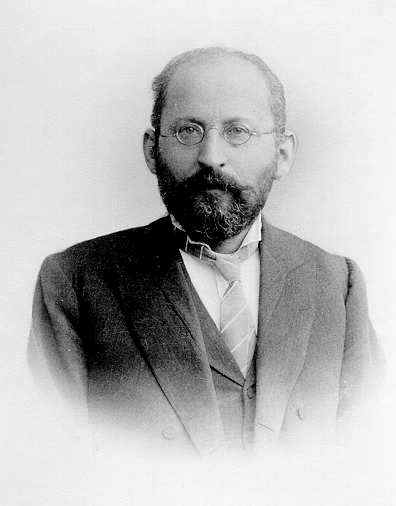
In fact, Bernstein never repudiated his break from Orthodox Marxism. Revolution: The New Moral Imperative was a text which shared the revisionist, neo-kantian sensibilities of his earlier work. But it nonetheless created shockwaves that reverberated throughout the world of European social democracy. Two decades after writing The Prequisites for Socialism , the text which established him as Europe’s foremost revisionist, Bernstein now repudiated his opposition to revolutionary struggle, instead insisting that the “moral duty of every socialist and proletarian is to work, with as much rapidity as possible and with whatever means he has at his disposal, toward the overthrow of the existing anarchic international order and its replacement with a federation of humane, socialist states.” For this, Bernstein wrote, “There can be no moral compunction, no shying away from the use of all necessary means, for the present capitalist class has proven beyond a doubt its unfitness to rule: to risk such butchers maintaining their power in perpetuity is a far graver affront to humanity than any incidental upheaval that may ensue from the transition to a more rational social order. If, in the course of several decades of steady improvement in worker’s conditions it appeared a foolish utopianism to declare the need for revolution, now it is those who still urge caution who appear the true utopians, willing to sacrifice upon the altar of pacifist principle the youth of the continent and the attainment of socialism.”
Eduard Bernstein, unlikely revolutionary
It is difficult to assess the true impact of Bernstein’s writing. Unlike the Luxemburgist and Leninist left, most of the centrists whom this text addressed were either in prison or “inner emigration”. Their journal entries from the time, still being uncovered, reveal a good deal of sympathy for Bernstein. Criticism, insofar as it appeared, was directed more at the person and perceived hypocrisy of Bernstein than the nature of his proposals. The text was particularly popular in French socialist circles, which were as a whole more patriotic and moderate than those elsewhere.
Tangible movement to the left was also evident among the orthodox German left-centrists. Following the Riga Treaty, a number departed for revolutionary Russia, including Otto Wels, Georg Ledebour, and Hugo Haase. There, Bernstein’s text and Luxemburg’s ideas were both debated much more publicly. Together, Ledebour and Wels drafted “Revolutionary Social Democracy: A Recovery”, a scathing criticism of the past twenty years of social-democratic complaisance. A programme for the “Renewal of the Social-Democratic Party” was drawn up, which called for the party to commit to the “transition to a socialist economy through the nationalization of all major industries, and the empowering of trade unions to run the major enterprises, in democratic coordination with the relevant union locals.” They expressed much more skepticism about the worker councils than Luxemburg, but still viewed them as a valuable body in the revolutionary struggle.
In the parties that could still meet and function semi-normally, the slogan everywhere was “only scoundrels to the right, only comrades to the left”. Jean Jaures, the arrested head of the SFIO, wrote clandestine articles excoriating Clemenceau and repudiating his prior alliance with the party’s right. In Bulgaria, the broad socialists expelled their pro-war social-patriotic right flank, and merged with the Leninist Narrows. In Italy, the socialist party sought a rapprochement with the revolutionary anarchists, and Amadeo Bordiga and Antonio Gramsci formed a bloc that pressured it to expel its right-wing revisionists.
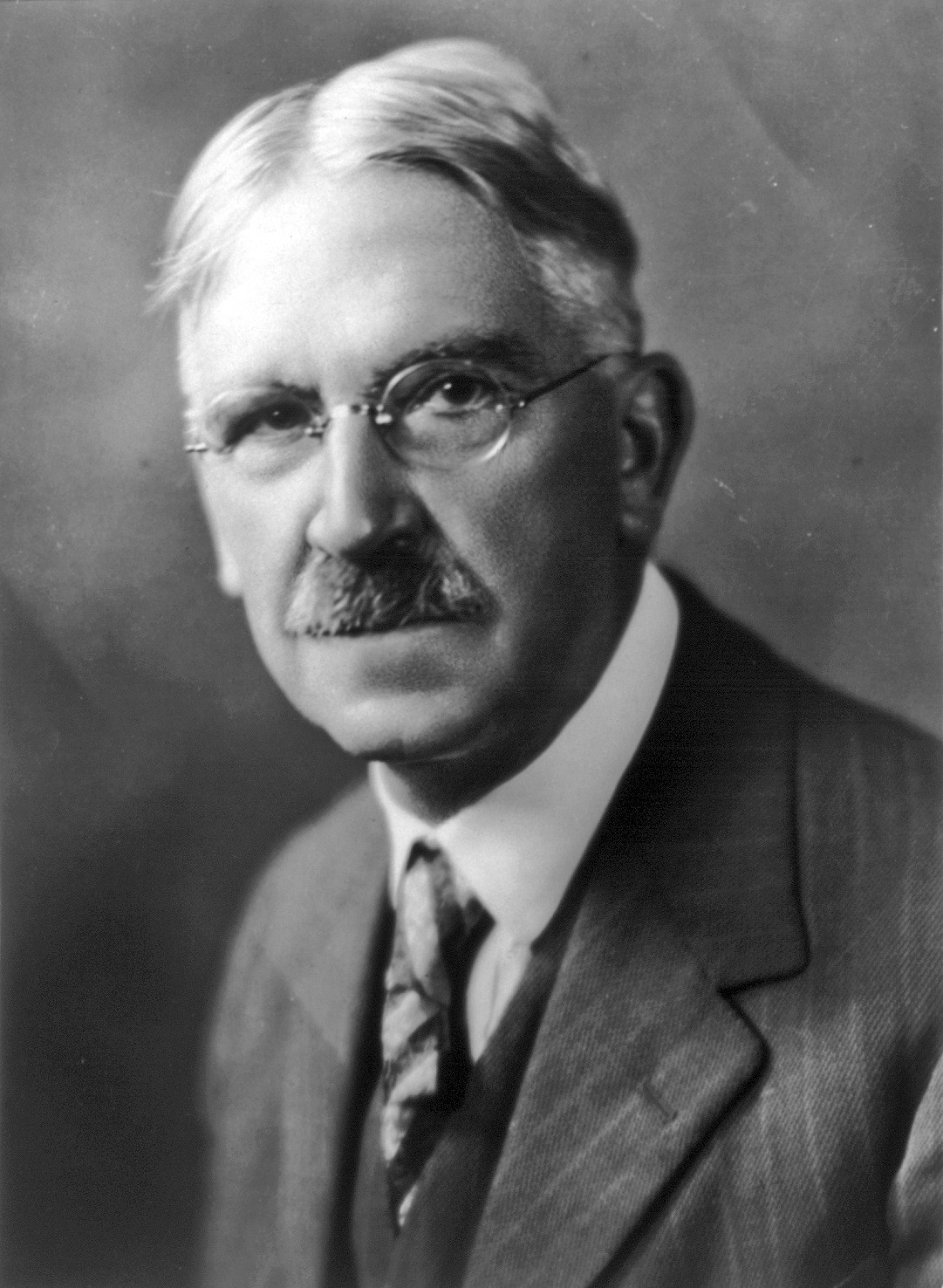
Even in the English-speaking countries, with their traditionally weak, reformist labor movements, change was coming. Joe Lewis’ CIU waged a massive recruitment drive across the industrial midwest, buoyed by low unemployment and a friendly President. To solidify his alliance with the budding labor movement, Bryan moved to socialize the war industries. John Dewey and a group of moderate socialists formed the “National Council for Industrial Democracy” to agitate on behalf of Bryan’s agenda.
John Dewey, American Philosopher and Founder of the NCID
In England, the inflationary policies of the government and desperate demand for labor placed trade unions in an advantageous position. Discontent with wartime measures led many of them to formally affiliate with the left-wing Independent Labor Party. After nearly two years of internecine conflict, the Labor Party itself finally adopted the ILP’s antiwar line, smoothing the path for Ramsay Macdonald’s successful leadership bid. Compared to his continental counterparts, Macdonald was still a fairly moderate figure, but the war and a censorious Tory government had moved his politics to the left. While he publicly distanced himself from “Soviet Revolution”, he also embraced the use of strike tactics to end the war, which put him in the cross-hairs of British intelligence. Perhaps most worrying for Churchill and company was the cross-class alliance between British Labor and middle-class radicals, the largest of its kind among the belligerent powers.
The leftward shift was also evident in the neutral nations of Europe. After years of serving as an uneasy broker between the left and right of the Swiss Socialist Party, Grimm embraced the Zurich radicals and adopted their revolutionary platform. In the Netherlands, unions slowly deserted the more moderate SDAP during the first few months of 1919, then did so in droves following the Netherlands’ entry into the war. Similar developments occurred in Sweden, Norway, and Denmark.
All around the world, not just workers, but socialist politicians, activists, and theorists rejected their previous reformism and rediscovered the true, revolutionary content of social-democracy…
Paul Mattick, “In the Shadow of the State, We Toil Together for a New World: The development of Interstitial Institutions in the Great War’s Final Years”,The Journal of Praxis(December 1939)
…What is an interstitial institution? It is most usefully understood as a form of social or political organization which prefigures a different type of society, and exists outside the bounds of the state. Consumer and producer cooperatives, mutual aid societies, and working-class lending libraries all count insofar as they embody non-capitalist social relations. In the prehistory of the European revolutions, the most prominent such institution is undoubtedly the trade union, though some have argued that this is not a fully interstitial social form, as its essential purpose is to allow workers to more effectively bargain for wages and better conditions in capitalist economies. For the time being, we shall table this question.
This article takes its title from the letters of Emil Barth, one of the many revolutionary shop stewards of Berlin. Under the shadow of gigantic machines of repression, Barth and countless others like him struggled to build solidaristic practices in the uninhabited crevices of capitalist society. The density, quantity, and scale of interstitial institutions all exploded in 1919, as the new, socialist societies of the future struggled to burst forth from the twilight days of late imperial capitalism.
We should be mindful not to fall into revolutionary voluntarism here, for most of those who engaged in novel cooperative schemes did not conceive of their work as preparation for a new, revolutionary order. It was the structural crises of capitalism which led the working classes to engage in new forms of social organization, typically as a means to vouchsafe their own dignity and survival. Even so, following the outbreak of revolution, it was these institutions which emerged into the daylight and provided the essential rudiments of the new society. Their relative strength was a reliable predictor of revolutionary success.
The exponential growth of interstitial institutions bore an inverse relationship to the power of the trade-union movement. In the Great war’s final years, conventional trade-union advocacy was stifled by state repression in all the belligerent powers. Not infrequently, individual unions were entirely co-opted and ceased to function as organs of worker power. But workers would not simply allow their political representatives to be silenced and their organizations repressed; instead, they built interstitial associations that replaced the decaying, bureaucratic trade-union form with bodies that were more organic and democratic.
The most well-known interstitial institution is the worker’s councils. These typically met in secret, either at a pre-determined time on the factory floor, or in the household of one of the members. In Germany, they began meeting after the failure of the October Rising, when even the most radical sections of the working class felt the need for a more cautious, incremental approach. Their stupendous growth throughout 1918 attests to their effectiveness as a mode of organization, particularly when facilitated by sympathetic figures in the lower echelons of trade unions. In 1919, they began to spread across the catholic trade union movement as well after several attempts at electing progressive, antiwar leaders were stymied by conservative union officials.
The councilists played a cat-and-mouse game with the state. By the last year of the war, they had become sufficiently adept at this that they became the nexus of an entire network of interstitial institutions, particularly in Germany, the Loire Valley, and Vienna. These included secret newspapers, mutual aid societies, corresponding networks, and even credit unions. In many instances, functions which were previously delegated to trade unions and parties were taken up by the worker’s organizations. Given their dispersed, decentralized character, the ability to communicate with other councils was essential, and a large amount of their funds were dedicated to cultivating the so-called “workman’s highway”, which ferried uncensored letters from one council to another. At times, this was made unnecessary by the assistance of friendly telegraph workers.
Food procurement was a particular concern in Germany and Austria, but with the onset of the uboat campaign, it also became a matter of importance for French and Italian unions. The clandestine character of the councils and their connections to the underworld made them ideal bodies for procuring grain and meat from the growing black markets. Often, a member with relatives in the countryside would be provided a share of the entire council’s weekly wages, and would be given the task of purchasing food during a “family visit”. In other cases, consumer cooperatives with illegally procured food emerged.
There were widely varying degrees of consolidation in different national contexts. In England, the relative laxity of labor law and reformist mentality of the average worker impeded the growth of the council movement. Even as forms of interstitial organization multiplied, they remained dispersed and uncoordinated. By contrast, in Germany, interstitial organizations were widespread and increasingly consolidated, even reaching the class of independent small farmers after harsh grain requisitions in 1919. In France, the council movement was unevenly developed, with a much greater degree of worker radicalism in the Loire and Rhone Valleys than elsewhere, though levels of centralization in those areas mirrored the German pattern. In the Netherlands, the council movement had an unusually close connection to the SDP, which lent it a more overtly political character.
The development of interstitial institutions was not universally tied to the council movement. Working class organs of self-defense were frequently organized at the local level. The “red brigades” of Vienna, Berlin, Hamburg and Saxony were composed of a mixture of injured soldiers and radicalized workers. They tended to meet in taverns and churches rather than workplaces.
Councils were found much more infrequently among white-collar workers, though there was no absence of mutual aid societies, informal consumer cooperatives, secret discussion groups, and even corresponding networks. In Germany, France, and England, the most radical sections of the white-collar working class waged a continued struggle for control of their unions. This had more success in the latter two countries, where there was less surveillance and repression; in Germany, left-wing clerks and secretaries found their ambitions frustrated time and again, contributing to their radicalization.
Germany and England saw the most thorough organization of an oppositional professional class and petite-bourgeoisie. In the latter, the organs of this class can only be termed “interstitial institutions” in a very loose sense, for they were principally radical liberal activist groups rather than potentially insurrectionary bodies. Some, such as the Union of Democratic Control, engaged in effective resistance against the reactionary conservative government, but most of their membership hoped above all for a return to pre-war normalcy.
Any verdict on the organization of German lawyers, shopkeepers, doctors, and other titled professionals will be significantly more complicated. Traditionally, this group was fiercely conservative and nationalistic, but the war had tested their convictions; in absolute terms, they lost the most of any social group during the war, and many were effectively proleterianized. A not insignificant number were driven to the right, into the arms of the freekorps and national-socialist movement. But the long afterlife of the national-social association should caution us against a unitary judgment.
We should also, however, be careful not to conclude too quickly that Ratheneau’s funding of these groups was evidence enough of their socialist character. The majority of transcripts we have of the chapter-meetings do not attest to a burning desire for social revolution, even if the Ludendorff dictatorship is frequently denounced in severe and uncompromising terms. Nonetheless, there is some evidence that these functioned as interstitial institutions. Firstly, the different chapters of the national-social organization - largely dormant during the first few months of 1918, due to the government crackdown - began to meet in secret, cultivating networks not unlike those of the socialist council movement. Secondly, outrage and resistance was not only directed at the conservative political elite, but also business and industrial interests implicated in the war. The middle-class April protests, organized at least in part through the National-Social Union, had a decidedly populist character, with masses targeting both symbols of political power and industrial establishments. Finally, there was little desire for a restoration of prewar, Wilhelmine Germany, and significant interest in an alliance with socialists, particularly after following the suppression of the April protests. A not inconsequential number of National-social activists were soured on the existing parties of progressive bourgeois parliamentarianism due to their perceived inaction.
…Paradoxically, over the war’s final year, strike action decreased in every belligerent except England and Austria, even as a broader opposition coalesced. After some notable sympathy strikes in April and minor, sectoral actions over the summer, labor was (mostly) quiet until the November revolution. More coordinated, effective means of repression meant that strikes (now uniformly illegal) were swiftly and severely punished, with ringleaders sent to the front and the rest put under military discipline. In this atmosphere, workers chose to engage in slowdowns and work-to-rule actions in order to protest deteriorating working conditions, with many notable successes. The greater incidence of strikes in England and Austria is attributable to the comparatively liberal atmosphere.
The various left-radical agitators had something to do with this, too. In Germany, the majority of councils in Berlin, Saxony, Hamburg, and Bremen chose to affiliate with the Revolutionary Workers’ Front, a revolutionary collective financed through the Soviet Union and associated with Luxemburg’s Internationalist group. The affiliated councils of the RWF engaged in significantly less strike action than unionized workers without council delegates. In part, this was due to their greater degree of coordination, which allowed them to win concessions through less conspicuous forms of industrial action. It also is attributable to the explicit counsel of local left-radicals, who urged the group to refrain from engaging in strikes until it was certain it had the resources to topple the Ludendorff government. Of course, in the background there was the fear of repeating the fiasco of 1917, which led to a perhaps excessive caution amongst labor activists.
In France, a similar pattern emerged, with a number of CGT locals and worker-councils signing confidential “association agreements” with the Council for International Peace, which was now controlled by an uneasy coalition of left-wing socialists, anarchists, and syndicalists. On four different occasions in 1919, it was dissolved by the authorities following an arrest of its executive committee, only to be reconstituted by lesser known activists and worker’s delegates. They did themselves little favors by engaging in widely publicized strikes during the April protests, making easy targets for their leadership. They also spectacularly failed to organize the growing movement of women workers, whose organs of power remained mostly isolated from the rest of the labor movement.
The women’s movement was concentrated in the Loire Valley, particularly in the textile and garment industries. The desperate need for manpower at the front had continuously bolstered their ranks as skilled male labor was taken off the factory floor. Male-dominated unions were hesitant to organize the women workers, even though they consistently showed a greater degree of initiative and radicalism than their male counterparts. By 1919, there was a vast informal empire of interstitial institutions among the women workers of the Loire Valley, undergirded by contributions of up to 20% of their weekly wages. With these funds, the women’s organizations created credit unions, consumer cooperatives, and even a form of life insurance for those who lost their husbands in battle. More than a few also ran local food pantries for the sick, indigent, and elderly. These associational ties would prove quite enduring.
…In short, interstitial institutions and practices prefigured the new, socialist societies of the 1920s. Created originally for working-class survival, they came to function as essential organs of politics, production, and social reproduction in the postwar era. The failure of revolutionary actions in England, India, and elsewhere can be attributed in part to the relative paucity of these institutions, which made working-class resistance less robust. Even the peculiar, pathological political structures of the Soviet Union may be explained by the dearth of robust interstitial networks among broad classes of workers and peasants, which necessitated a greater degree of centralization and state control in the building of socialism…
Bình luận
0