1924: The Year of Struggle (Part 2: The Stockholm Conference)
_6 years, 9 months, and 15 days. The set of numbers had a pleasing congruity. Adolph Joffe temporarily entertained the idea that this was more than merely coincidental, a hint, perhaps, from some providential god. But he had forsworn such illusions long ago.
Much had changed in the nearly seven years since the Treaty of Warsaw had been signed. There was a time when it felt as if the revolution was dependent upon the whims of the mad general Ludendorff and his reactionary hangers-on; that time was gone. So too, was the man who led them here, who foretold the great proletarian offensive in Central Europe. And somehow, Joffe, the minister of foreign affairs, had remained there throughout all the government shakeups; he had not signed onto Trotsky and Bukharin’s mad plan to enter into an alliance with the peasant revolutionaries, which had likely saved him in the revolution’s early days. And now they still regarded him as an ally, of sorts - he could tell that Leon no longer had the same affection for him. But nobody wanted to replace the foreign minister in times like these.
Once more to Stockholm, then. What was it about this provincial backwater that so appealed to the capitalists? They refused the offers of the Italians and the Germans. Not entirely unfair, perhaps; he would not be packing off for London or New York anytime soon. It must have to do with Brantling. Not a man to be trusted, but admirable in his own way. The Germans were far too chummy with him, though. One would have thought that they learned their lesson from the failure of parliamentarianism of the pre-war years.
Stockholm bay, the so-called Riddarfjarden, stretched out before the Soviet Ambassador. It was unseasonably warm. The water was filled with pleasure boats of varying make and craft; the playful carping of the young struck him like the idle trills of so many song-birds. Joffe suddenly felt like an old man; but he had just turned forty years of age! A quiet chuckle escaped his lips.
Joffe sat on the lone bench beside a long stone promenade splayed lazily along the water’s edge. The Swedes had just started to build up the area, it seems; everywhere, trees were being planted and parks carved out of forests to provide the best of “modern living” for the city’s workers. An older gentlemen, who appeared at least two decades senior to Joffe, came over and took a seat; Joffe obliged him, not upset by the company. At first, Joffe thought him to be another one of the English dignitaries. There was something unmistakably familiar about the man. But before he could get the chance to make a remark, another man, much younger, strode up to him, seemingly from out of nowhere. He was from somewhere in the east; Joffe at first assumed that he was one of the Japanese observers, but on closer inspection, he appeared to be from elsewhere; perhaps the Chinese had lobbied the Americans into permitting their own delegation?
To his astonishment, the man approached him outright and began speaking fluent Russian. “Comrade Joffe, the Soviet Commissar of Foreign Affairs, might I say how pleased I am to make your acquaintance. I was sincerely hoping to run into someone of your caliber during my sojourn here in Stockholm; Paris, I am afraid, has gotten far too dangerous…”
Joffe frowned at the mention of the Parisian debacle. Who was this man, then? An easterner in Red Paris, who had the wits and resourcefulness to escape the city in time? And was this some manner of insult or accusation? Joffe had to admire the audacity…
“Yes, the Parisian tragedy troubles us all…we will have to confront the Americans about it at some point. I am pleased to hear you were able to depart from the city in time, too many were not so fortunate. Excuse me for one moment…” Joffe pauses, glancing at the gentlemen nearby, slightly concerned at the prospect of divulging sensitive information. He addressed the man in Russian; after receiving a somewhat confused, bewildered look, he switched to French. “Sir, I cannot help but feel that I have seen you somewhere; are you attending the upcoming conference?” The elderly gentleman smiled ironically at the suggestion, the greys in his beard flashing in the waning sunlight. “I am afraid it would be too much for me to attend a gathering with my persecutors, even if I was invited.” Joffe thought that seemed unreasonably petty; the entire Soviet delegation had spent their time in exile during the days of the Tsar, and the British had been content to bankroll them. “It is John Dewey. And this…” He gestured over toward the easterner, who was standing patiently, with great poise and a sense of quiet dignity. “Is Nguyen Ai Quoc, a fellow exile. Though I have my doubts that is his real name.” Nguyen Ai Quoc - that is a name he knew. A vietnamese dissident. IntRevMar’s anti-colonial committee had tried, largely in vain, to gain contact with him over the past few months. He was in Paris all along, then…
The man stepped forward slightly now, and Joffe spoke again. “Nguyen Ai Quoc! Well, unless you are a British spy taking on the name…” He now spoke in French, largely convinced of this “Dewey’s” conviviality. “Then it is indeed a pleasure to make your acquaintance. How, if I may ask, have you made your way here? Were the Germans not hospitable to hosting you? You could have written a letter to Petrograd, too, you know, I have no doubt our government would have offered you a position at the IntRevMar offices in the city…and well, I suppose I must ask: has this Mr. Dewey become an associate of yours?”
“I would hardly call him an associate, more of an interlocutor. Mr. Dewey, you see…” His eyes are diverted for a moment to the man. “He is an intellectual, and hardly wants to become involved in heady matters of state. After all, this city is crawling with American and British spies, and he would be quite well-advised to avoid doing anything that might provoke them. But he enjoys a good conversation, you see, and finds that Stockholm is one of the few places in the world where that can be achieved. And he finds plenty to approve of in our own conceptions, but, as an intellectual, he seems to be incapable of coming fully on board. There are still some outstanding disputes about certain details, you see.” He looks back at Mr. Dewey; the man’s eyebrows are raised slightly, and he wears an expression both warm and bemused. “Yes, that is a fair characterization of things. Mr. Joffe, I am not a Bolshevik, but I despise what my own nation has become. Mr Ai Quoc here, well, he has spoken stirringly of the need for a free indochina. He believes that it is in Asia, in the east, where the true destiny of your revolution will be forged.” The man adjusts his glasses, seeming slightly unsatisfied with his own phrasing. “You two surely have much to discuss, and so I will excuse myself.” He pauses for a moment, his mind revolving around some unknown object. “Mr. Joffe, if you find the time, feel free to call upon me while you remain in Stockholm, but do make it discreet.” _
Prelude
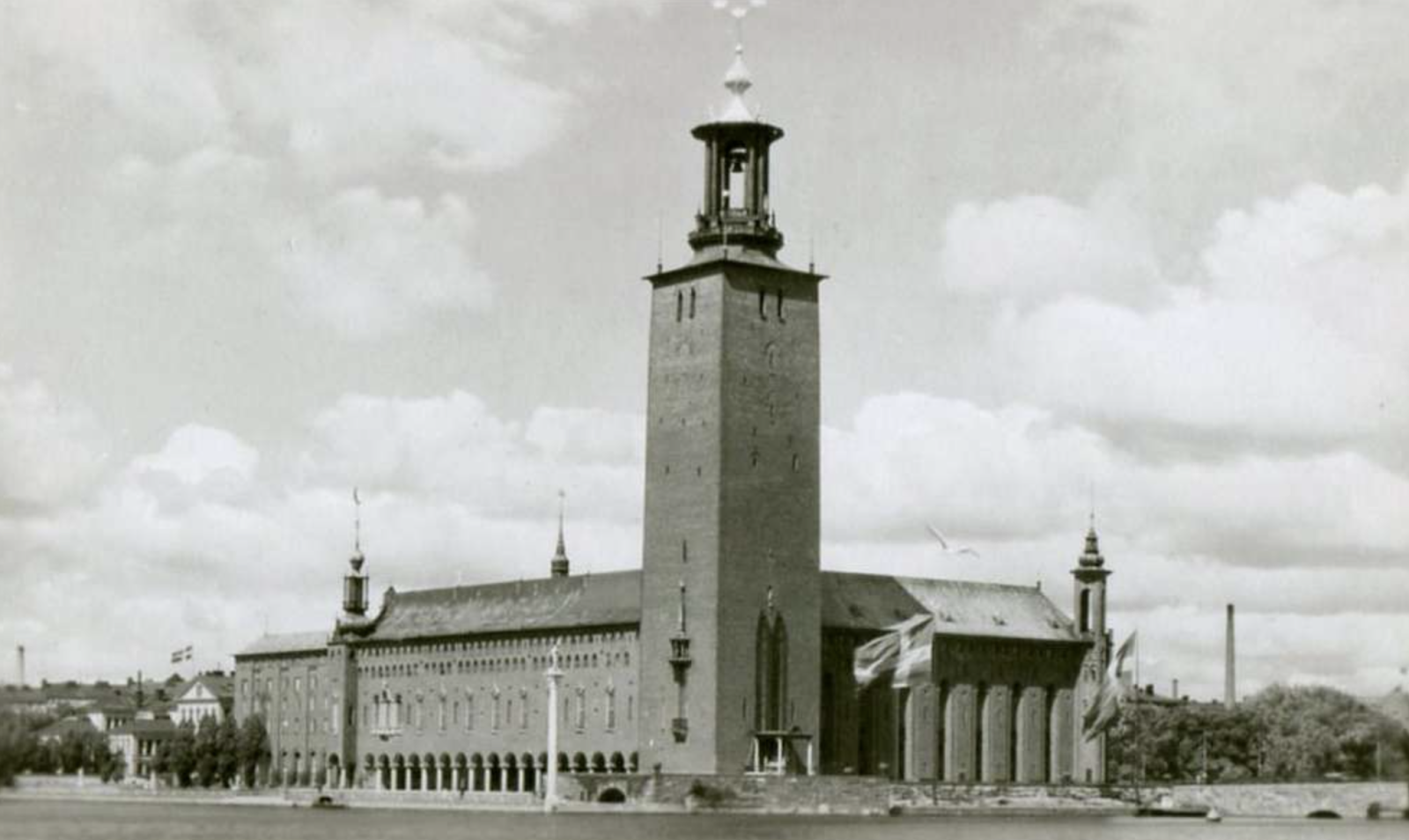
The three dozen diplomats who met in Stockholm to hammer out an armistice concurred on the need for a more formal conference to settle remaining disputes and lay the groundwork for a lasting peace. The Swedes were quite interested in promoting diplomacy, not just for the sake of the nation’s commercial health but also for its international prestige. After some mild pressure from their hosts, the diplomats agreed to include in the text of the armistice a reference to a future conference in Stockholm. Brantling generously offered the use of the waterside City Hall, which had finished construction just a year ago, though many of the attending dignitaries would be forced to room in the less-than-well-kept Stockholm Royal Palace, which had not received renovations in several decades.
Before the conference began, several agreements were reached between states fighting peripheral conflicts. In late 1923, Japan signed an agreement with the Soviet Union returning the northern half of Sakhalin Island in return for a 5-year nonaggression pact. This still left the matter of the Far Eastern Railway unresolved. Japan had won the right to station hundreds of thousands of troops in Manchuria, which meant that, if it so desired, it could easily seize the railway. Doing so, however, would provoke a diplomatic incident and undercut the Soviet-Japanese detente. The Soviets were unwilling to surrender the railway categorically to Japanese control, but also believed Japan to be more useful as a trading partner and potential counterweight to American power in the Pacific. In February and March, Soviet and Japanese diplomats met in Vladivostok, hashing out a deal which saw the Soviet Union sell off its shares in the railway at an inflated cost to the Japanese government, which in turn promised reduced freight and passenger costs to the Soviets for fifteen years. The Japanese formally recognized the Soviet sphere of influence in Mongolia and West Turkestan, and both sides promised to respect each other’s territorial integrity.
Greece and Turkey also reached a peace, with Britain acting as a mediator. Though hardly a neutral party, Britain did hope to stabilize the situation in the Near East and gain Turkish acceptance of the British presence in Constantinople. This they were not able to definitely achieve, though the Greeks and Turks signed an armistice and agreed to additional population transfers. The Turks refused to permanently recognize Greek control of the Western Anatolian coast, but they did promise to cease hostilities for at least five years.
The Stockholm Conference: Hopeful Beginnings
The Stockholm Conference opened on August 10th, 1924, just over ten years after the Great War began. The conference was just as much a vehicle for domestic propaganda as it was a diplomatic summit. Photographers and journalists were omnipresent, and arrived from as many nations as the diplomats and ambassadors. Governments treated the gathering as an opportunity to prove their pacifist credentials to a war-weary population. Several famous photographs circulated of the “Big Six” - Luxemburg, Sverdlov, Root, Hoover, Gramsci and Haldane - seated in a not-so-private side-room. In all, over twenty-five states participated in the negotiations:
IntRevMar and IntRevMar-affiliates
The Soviet Union
German Socialist Republic
Worker and Peasants Republic of Bulgaria
Worker and Peasants Republic of Italy
Federal Council Republic of Hungary
Democratic Republic of Serbia
Galician Socialist Republic of Poles, Jews, and Ruthenes
Dutch Council-Republic
Sweden
Denmark
Democratic Republic of Kurdistan
AU and AU-Associates
United Kingdom
United States of America
Republic of France
Kingdom of Spain
Kingdom of Belgium
Republic of Brazil
Kingdom of Norway
Kingdom of Portugal
Dominion of Ireland (Observer)
Republic of Greece
Dominion of Canada
Dominion of South Africa
Dominion of Australia
Dominion of New Zealand
Neutrals
National Republic of Turkey
Empire of Japan (Observer)
Republic of China (Observer)
Swiss Confederation
Among the world’s people, there were both high hopes and profound skepticism. While most fervently yearned for an enduring peace that would permit reconstruction and the resumption of unrestricted commerce, there was still deep-seated mistrust of the ideological enemy. Not just state propaganda, but also the self-mobilization of civic society had instilled a perennial loathing for, alternatively, “Bolshevik Aggression” and “Anglo-American Imperialism.”
It did not help that the conference’s aims were still very much up in the air. The grand procession of diplomats and the palatial surroundings of the conference belied a curious lack of purpose. Resolutions issued by Italian and German organs of worker’s democracy spoke of a general desire for peace and the end of imperialism, but did not provide concrete directives. For the diplomats and politicians representing the Central-European states, however, there was very real domestic pressure to reach some form of peace. In America, even the wide-ranging crackdown on liberal civil society had not been sufficient to win permanent support for putting the country on a war footing. Hoover knew this well; he had campaigned on a “return to normalcy” and the cessation of foreign military adventures, and was not ready to renege on his promises.
The Stockholm City Hall, Site of the 1924 Stockholm Conference
The Soviet Union stood as something of an outlier. Protected by a cordon of friendly socialist states, it had less to fear from a resumption of hostilities. Its government was ideologically committed to the project of world-revolution, and its greater control of domestic politics meant that there was less reason to fear popular pushback to a continuation of warfare. It also possessed the largest - and most effective - army of all the socialist powers. The soviets were therefore well-positioned to press for maximalist concessions.
The first matter of the conference was to determine an agenda. It was universally agreed that the settlement of existing territorial disputes was crucial to avoiding another outbreak of conflict. These were relatively few: the border between the two French states, Greek and Bulgarian claims to Thrace, the British-Danish conflict over Iceland and Greenland, and Italian claims over Sardinia, currently the home of the Kingdom of Italy. Helpfully, the socialist states had long ago renounced all claim to their colonial possessions, though they did insist that they be permitted “self-determination” rather than be subsumed under British suzerainty. Related to the issue of territorial boundaries, there was the matter of the neutral European states: Albania, Switzerland, and Turkey. Both sides jockeyed for influence in Turkey, but neither was willing to make the territorial concessions necessary to bring the Turks into their own camp. Britain and the Soviets both found themselves constricted by their alliance with, respectively, the Greeks and the Kurds, unable to make concessions which would alienate their regional partners. Turkey nonetheless insisted that if it was not given territorial concessions, that the main powers at least come to some formal agreement to not interfere in internal Turkish politics. Sverdlov would only assent to such a proposition if additional British guarantees were given over Russian use of the straits. This was reluctantly provided, and Turkey thus settled into its position as a buffer state between the two blocs.
Switzerland was another point of tension. Entirely encircled by socialist polities, it had no means of trading with the broader world unless its goods were permitted to move through them. For their part, Britain and America entirely washed their hands of the matter, much to the despair of the Swiss government, which had previously been hopeful that any IntRevMaw violation of its sovereignty would lead to formal Atlantic Union support. This forced the Swiss to effectively supplicate itself before the emerging socialist confederation in Central Europe. Trade concessions and the promise of internal electoral reform expanding the suffrage soon followed in return for Italo-French permission to transship Swiss goods. It was hoped that the Swiss Social-Democratic Party could be brought into power peacefully and bring the state into the socialist bloc.
Then there was the matter of Albania. Against all odds, the Ottoman prince Ahmed Izzet Pasha still led the tiny nation despite the demise of the Ottoman state. Hoping to keep Albania free from the acrimonious power blocs, he had refused a Soviet offer to help him retake northern Epirus from Greece, and also British attempts to mediate territorial disputes. Now, representatives of the Ottoman Prince, hoping to take advantage of Albania’s position on the Adriatic, tried to secure explicit guarantees from the main powers. Even Sverdlov had little interest in bringing socialism directly to the “backwards mountain-peoples” of Albania, but he did want to ensure it did not become a staging ground for the expansion of Atlantic Union power in the Balkans. The AU and IntRevMar thus came to a relatively amicable agreement to respect the neutrality of Albania. A muted protest, but little more, was issued by the Serbian Social-Democratic Party, which still held some irredentist ambitions but hardly had the desire to regain the reputation of the old Serbia.
The direct territorial disputes between the two blocs were considerably more difficult to resolve. Danish diplomats demanded the return of Iceland and Greenland, as well as a formal apology from Britain. Britain would only permit the territories to be retroceded if Denmark left IntRevMar and forswear all security cooperation with Germany, in effect making it a neutral state. Although some on the right-wing of the Danish Social-Democrats were desirous of such an outcome, this was an immensely risky security gamble so long as German soldiers stood posed to stream into Jutland and attack its wayward ally. A greater number were outraged with British intransigence on the matter; they had already promised that no IntRevMar ships would be based on the islands, and even that the naval facilities would not be expanded without British permission. Britain - even more fearful of a red armada after the merging of the German, Italian, and Dutch navies - refused to budge. Eventually, German diplomats pressured their Danish counterparts to come to a compromise agreement. While Denmark would not formally rescind their claims to the islands, they would agree to pursue purely “peaceful channels” for their return. In exchange, Britain agreed to respect the language rights of Danish residents and provide a small yearly payment for their possession of the islands.
Adjudicating the border disputes between the rival French governments was made considerably more vexatious by their refusal to directly recognize each other’s legitimacy. This meant that negotiations had to be conducted by third-party intermediaries, typically a combination of German, Italian, British, and American diplomats. Frequently, these third powers interposed their own interests into the negotiations. An exchange of rural red burgundy for some territories in northeastern France was vetoed by Britain, who wished to avoid having any channel ports fall into the hands of the socialist government. By the end of the conference, most minor border disputes had been resolved, but ominously, each government still refused to directly conduct diplomacy with its rival.
Bulgaria and Greece, exhausted after a full decade of war, settled their remaining conflicts with surprising ease and amiability. Both governments were worried that their major-power sponsors might use them as a platform for a military build-up. Despite Russian resistance and some British mistrust, Bulgaria and Greece agreed to a fifteen-year non-aggression pact and pledged to limit the amount of troops from foreign powers stationed near one another’s borders. These moves were hugely popular among their domestic populations.
The resolution of territorial matters would help reduce the risk of a European conflict once more becoming a World War, but it did not guarantee peace. It was understood by all involved that this would require a more thorough transformation of international relations. In fact, power was already beginning to shift from sovereign states to larger confederal entities and supranational organizations. British and American diplomats, though not unanimous on all matters, agreed on the need to present a united front well before the conference met. There was somewhat more dissension in the Soviet and German camp; the new political concordance between Germany and Italy had brought the former to a less maximalist and hardline position, but the need to preserve proletarian internationalism was agreed upon. The Council of Revolutionary States, in concert with the main body of IntRevMar, issued a series of “minimum directives” meant to guide the diplomats at Stockholm. After some pressure, even the social-democratic Scandinavian governments signed onto these.
The Stockholm Conference: A Fretful Conclusion
There was a hope that the conference would lay the groundwork for a supranational concert of powers that would incorporate the new trans-national organizations and keep the peace. Such a plan was supported by a motley mixture of British radicals, Italian left-catholics, and German social-democrats. A working group led by Sydney Webb, Eduard Bernstein, and Romolo Murri met in Stockholm two weeks in advance of the conference, and drafted a provisional plan for such a body. They agreed that the formation of such a “Commonwealth of Nations” would likely require a more than merely territorial settlement. The socialists would need some guarantee that key waterways, overwhelmingly controlled by Britain, would be open to their commerce and travel and that the much larger Anglo-American navies would not - as it appeared they were quite capable of doing - pen them into Eurasia. Britain may even have to formally renounce the device of blockade, though it would in turn require guarantees that the socialists would not interfere in colonial affairs and foment revolution on the periphery. Their slogan became “One world, Two systems”.
Most of their assumptions proved predictably unrealistic. The vast majority of socialist delegates agreed that the “minimum directives” -which instructed them to remain faithful to “the spirit and actuality of proletarian internationalism” - forbade any such promise of non-interference. Although they purposefully toned down the headiest internationalist rhetoric during the conference itself, there was no question of forsaking the hundreds of millions of toilers under the imperialist boot. For its part, Britain scoffed at the proposal to “internationalize” the waterways and return to the 19th century regime of free and open trade. After a half-decade spent fighting to shore up the vital arteries of the empire, Britain was not about to surrender them to an international commission or renounce its sovereignty over them.
The idealistic goal of creating a “Commonwealth of Nations” was soon scuttled. In its place, the rival powers at least hoped to create a framework that would avoid an arms race and permit a reduction of spiralling military expenditures. Britain worried that in an aeroplane arms race, it would lack the combined resources of Germany, Italy, the Netherlands, and Czechia. Its naval position was more secure, though even here a Central European build-up would likely mean American hegemony in the Pacific and South Atlantic.
Britain had to use the only leverage it had left. It promised the socialist states the use of the Suez Canal, Straits of Gibraltar, and Dardanelles Straits for the shipment of civilian goods, in return for a commitment of the Central Europeans to keep their navy at less than 75% of Britain’s tonnage. If the Soviets were to ever bring their substantial Baltic fleet through the Danish straits, this would give them a rough parity with Britain, though it is worth keeping in mind that a substantial portion of both forces were stationed in the Mediterranean, and Britain still obviously had commitments in the Pacific and Indian Ocean regions. No similar agreement was reached on the manufacture of aeroplanes, though both sides made informal pledges to scale down production.
So long as matters were focused on such questions of geopolitics and comparative military strength, a measure of consensus could be found between the two blocs. In a remarkable show of common purpose, both sides had done their best to avoid touching on matters of a more ideological character. Yet this would eventually prove unavoidable. Around a week into the conference, small delegations from Galicia and Serbia led by Karl Radek and Dimitrije Tucović demanded the repatriation of a number of “Polish and Croatian war criminals” from Britain. It would be politically imprudent for the British government to simply deny such a request; after all, Churchill had been brought down at least in part for his support of Dmowski. Haldane met personally with the Serbian and Galician delegations, promising to investigate repatriating the Polish and Croatian war criminals if the Soviet Union was similarly willing to return the INC leaders it was harboring. The moral equivalence suggested outraged the Serbian and Galician delegations and nearly prompted them to walk out of the meeting. Demands, backed by the vast majority of socialist delegates, were now made for a formal apology from the Anglo-American bloc for “Bankrolling the ethnocidal butchers of Belgrade and Krakow”. Leading diplomats of the capitalist powers denounced this as a “political stunt” and urged a resumption of negotiations. With the tacit backing of IntRevMar, the Serbian and Galician delegations left the conference in protest when it became clear that no apology was forthcoming.
Begrudgingly, the rest of the delegates returned to work. The Serbian-Galician intervention, however, marked not a singular irruption of disorder and polarization but the beginning of the conference’s disintegration. Anticolonial activists from a number of independent, unrecognized powers found their way into the conference, where they demanded that a “self-determination clause” be included in the final wording of the treaty. The socialist delegates backed their demands, and Jan Smuts, South Africa’s lead delegate, in league with the Americans, attempted to win support for a politically innocuous version of self-determination. But the attempts to water down the actual content of self-determination to mere consent and “enlightened trusteeship” met with united opposition from the socialist delegates. It proved impossible to find a compromise settlement. The Chinese, ostensibly an ally of America, voiced support for the robust version of the self-determination measure, an important propaganda coup for the socialists.
During the final days of September, the arrival of a delegation from the “Republic-of-India-in-Exile” threw the conference into chaos. The delegates of the Atlantic Union charged IntRevMar’s anti-colonial committee with attempting to undermine negotiations. In fact, only around a quarter of the anti-colonial committee was aware of the Indian delegation’s inconspicuous arrival in Stockholm; the initiative was largely that of the “Republic-of-India-in-Exile”. The socialist delegates closed ranks behind their Indian comrades, making it impossible for them to be expelled. Britain now appeared to be on the verge of leaving the conference altogether.
Ultimately, cooler heads prevailed. Notwithstanding their renewed rancor, the diplomats agreed to formalize previous agreements already reached in a series of documents that became known as “The Stockholm Accords.” Other commercial and military matters would have to be settled through future negotiations. There were no illusions that peaceful coexistence could be indefinitely maintained. British and American politicians denounced the “colonial subversion and expansionism” of the socialist powers, while the socialist bloc duly condemned the refusal of the Anglo-Americans to “abide by the democratic principle of self-determination, instead resorting to the establishment of a grand imperial despotism over the earth in service to their capitalist paymasters in London and New York.”
For now, however, peace was a necessity agreed upon by all parties. The Stockholm Accords were signed and published on October 8th, bringing an end to the conference. The war-weary citizens of great and minor powers alike greeted the news with unalloyed relief. Celebrations broke out in Berlin, Leningrad, Moscow, Copenhagen, Stockholm, Rome, Turin, Milan, Amsterdam, Strasbourg, London, Manchester, Liverpool, Bristol, Boston, New York, and Chicago as citizens hailed the beginning of a new age. The First Revolutionary Era had ended, and the Interregnum era begun. In the passing of one world into another, a great variety of strange and morbid symptoms appear: peace would neither temper their boiling intensity nor slow their rapid proliferation.
Bình luận
0